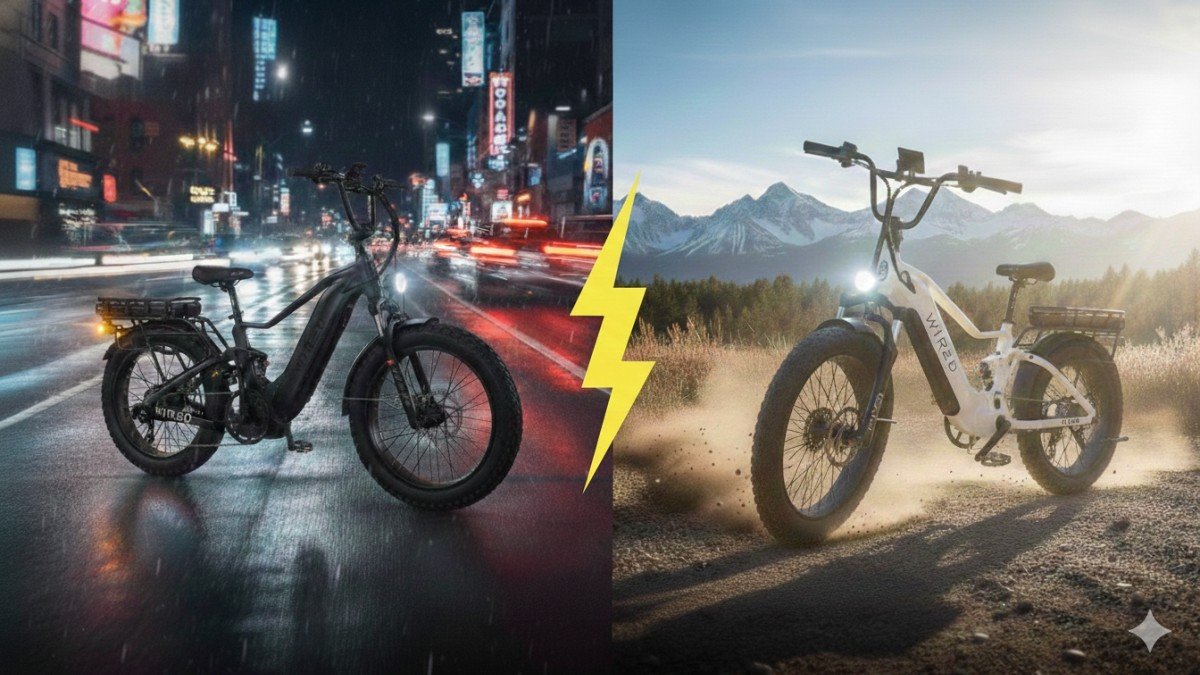
Video Content


Written Content
Wired Buyer’s Guide: Warrior vs. Viper – Which 72V Beast is Right for You?
Wired has effectively disrupted the "Power Performance Bike" (PPB) market, delivering 72V systems that bridge the gap between traditional eBikes and electric motorcycles. But with two distinct monsters in the lineup—the Wired Warrior and the Wired Viper—choosing the right one isn't about which is "better," it's about how you want that power delivered.
Whether you're looking for the "Clark Kent" stealth of the Warrior or the "Compact Chaos" of the Viper, here is everything you need to know before you pull the trigger.
SEE THE WIRED WARRIOR vs. THE WIRED VIPER WITH OUR COMPARISON TOOL
1. The Wired Warrior: The "Clark Kent" of eBikes
The Warrior is built for the rider who wants extreme performance without the "electric dirt bike" profile. It looks like a premium, full-size fat tire bike, but it packs a punch that will snap your neck back if you aren't careful.
The Ride Experience:
- Ultra-Stability: Thanks to the larger 26-inch wheels and longer wheelbase, the Warrior is incredibly planted. Even at 50 mph, it doesn't suffer from the "jitters" or speed wobbles common in smaller bikes.
- The Stealth Factor: Wired intentionally used a smaller, bright LED headlight instead of a motorcycle-grade bucket to keep the bike "unassuming." It’s designed to mix with traffic or hit the bike path without drawing unwanted attention.
- Pedaling Performance: With a massive 56T chainring, you can actually pedal at 45 mph and feel resistance. You aren't just a passenger; you’re an active participant.
Best For: Commuters who need to keep up with traffic, taller riders, and anyone who values high-speed stability over "flickability."
2. The Wired Viper: Compact Chaos
If the Warrior is a stable cruiser, the Viper is a tire-roasting stunt machine. It’s what happens when you take the power of Wired’s Predator and shrink it into a 20-inch step-through frame.
The Ride Experience:
- Unhinged Acceleration: Because of the smaller wheel diameter and the AWD dual-motor setup, the Viper’s acceleration is violent. In Pedal Assist 9, the front wheel will unload and spin while the rear wheel tries to put you into a wheelie.
- Maneuverability: The 20-inch tires make this bike incredibly "flickable." It’s much easier to toss into a corner or maneuver at lower speeds than the heavy-set Warrior.
- Component Overkill: It features a 220mm hydraulic brake setup and an Exsho Cowboy dual-crown fork. This is motorcycle-grade hardware designed to handle the 8,000W of peak power this bike can put out.
Best For: Adrenaline junkies, riders who want maximum torque for hill climbing, and those who prefer a more compact, maneuverable frame.
Crucial Shared DNA
Despite their different personalities, both bikes share the high-quality engineering that has made Wired a household name in the micromobility space:
- 72V Samsung 50S Cells: Both bikes use the gold standard in battery tech for high discharge and better heat dissipation.
- The "Menu" Advantage: No confusing P-settings or "secret codes." Both use an intuitive, bright TFT display that allows you to tune throttle strength, PWM levels, and motor behavior on the fly.
- UL Certification: Both the Warrior and Viper are fully UL-certified, providing peace of mind for the massive 2520Wh of energy stored on board.
The Reality Check: What Could Be Improved
While these bikes are at the top of their game, no machine is perfect. To give you the full picture, here are the trade-offs you’re making when you step into the 72V Wired ecosystem.
Shared Grips (Warrior & Viper)
- Weight: These aren't just heavy ebikes; they are essentially light motorcycles. At 145 lbs, neither of these is easy to hoist onto a standard rack or carry up a flight of stairs.
- Motor Noise: When you're pushing 5,000W to 8,000W through a geared hub or dual motors, you’re going to hear it. At high speeds, these bikes have a distinct "whir" or siren-like sound that lets everyone know you're coming.
- The Horn: Despite the 50+ mph speeds, both bikes ship with standard ebike-style bells or weak horns. If you’re mixing with traffic, you’ll likely want to upgrade to a motorcycle-grade horn immediately.
- The Tool Kit: The included multi-tools are made of softer metal and can easily strip the high-torque bolts on these bikes. We recommend using your own hardened steel tools for assembly.
Warrior-Specific Issues
- Safety Cut-offs: With the kind of "snap" the Warrior has, the lack of a kickstand kill-switch is a missed opportunity. It’s easy to accidentally twist the throttle while the bike is parked, which can be dangerous given its power.
- Dual Keys: You have to carry two separate keys for the two batteries. It’s a minor inconvenience, but a single-key system would be a much cleaner user experience.
Viper-Specific Issues
- Cable Management: On the Viper, the cable routing (especially the neoprene sleeve) can feel a bit cluttered compared to the more streamlined Warrior.
- Pedal Height: On earlier prototypes, the pedal height was a bit low, leading to potential pedal strikes during aggressive cornering—though Wired is actively addressing this.
Final Verdict: Choosing Your Weapon
The choice between the Warrior and the Viper comes down to stability vs. snap.
If you want a long-range, ultra-stable cruiser that can hit highway speeds while looking like a "regular" bike, the Wired Warrior is your winner. It’s the "Superman" of ebikes—hiding massive power under a Clark Kent exterior.
If you want raw, AWD acceleration and a compact frame that you can toss around, the Wired Viper is "Compact Chaos" at its finest. It’s for the rider who wants the most unhinged, tire-spinning experience available in a 20x4 platform.
Read the full Viper Review HERE
Read the full Warrior Review HERE
No comments yet…