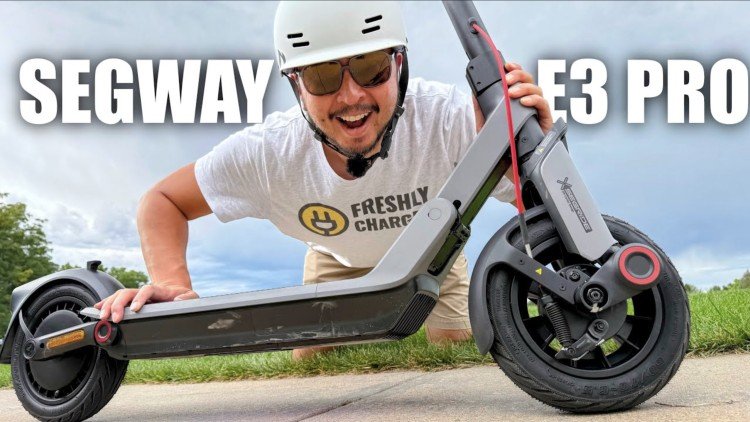
The "Commuter" category is defined by the seamless integration of micro-mobility into daily life. Unlike high-performance models that prioritize speed, these scooters are engineered for the "last mile", which is the gap between your front door, public transit, and the office. To qualify for this category, a scooter must strike a delicate balance between functional range and portability, typically maintaining a total weight of 40 lbs or less. This weight limit is the industry standard for "true portability," ensuring the vehicle can be comfortably carried up stairs, stowed under a desk, or lifted onto a bus without specialized effort.
Practicality is the driving force behind the design of these machines. A premium commuter scooter features a rapid-fold mechanism—often operable in under three seconds—and a compact footprint that allows it to vanish into tight urban spaces. In 2026, the focus has shifted toward "zero-maintenance" hardware. This includes the use of puncture-proof tires, drum brakes that are protected from the elements, and high-efficiency single motors that provide enough torque for city bridges while maximizing battery longevity. These scooters are not meant for racing; they are built for the reliability and consistency required by a daily 9-to-5 schedule.
Safety and durability are equally critical in the commuter class. Because these vehicles are frequently used in varying weather conditions and high-traffic areas, they prioritize high-visibility lighting systems and robust water-resistance (IP) ratings. Modern commuters also look for "smart" features like app-integrated locking, GPS tracking, and regenerative braking, which subtly recharges the battery during every stop. When you choose a scooter from this category, you aren't just buying a gadget; you are investing in a reliable, lightweight alternative to the car that simplifies urban navigation and eliminates the stress of parking.
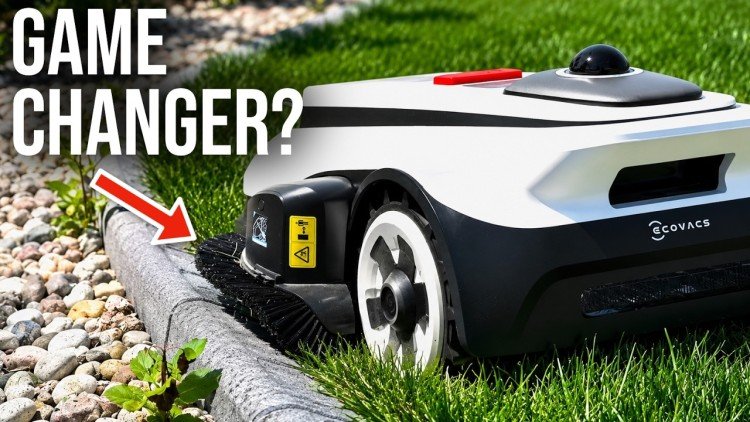
Not every yard with a slope needs a specialist mower, but past a certain grade, standard models stop cutting cleanly and start slipping. Most entry-level robotic mowers top out around 20 to 25 percent grade, fine for a gentle roll in the lawn. Once a section climbs past 35 percent, that's roughly a rise of one foot for every three feet of ground, wheels lose grip, cuts turn uneven, and cheaper mowers can stall out partway up.
What separates a hill capable mower from a basic one comes down to drive and traction. All-wheel drive matters here more than almost any other spec, since it puts power to all four wheels instead of two and keeps the machine from spinning out on wet grass. Tilt sensors and reinforced traction systems tend to come standard at this tier too, both there to stop the blades if the mower tips beyond a safe angle. None of this comes cheap. Slope-rated mowers run heavier and pricier than their flat-yard counterparts, and the tradeoff is worth it only if the terrain actually demands it.
The entry point for this category sits right around 35 percent grade, roughly a rise of one foot for every three feet of ground. The most capable hillside specialists push much further, up to 80 percent, for genuinely mountainous terrain, though that kind of capability comes at a real premium in both price and weight.
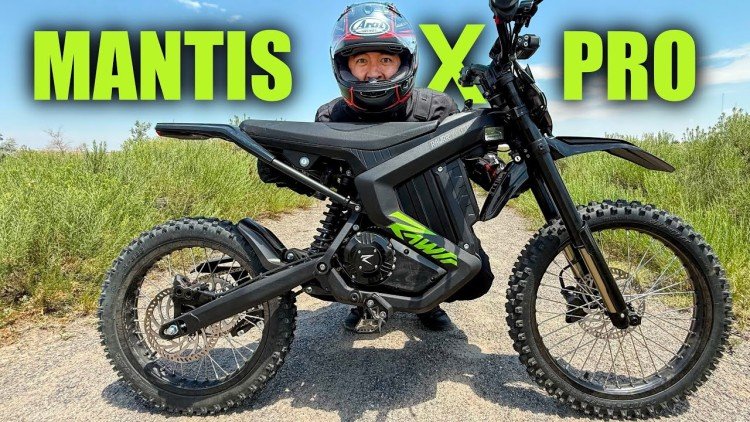
Braking matters more on a dirt bike than almost anywhere else in the electric powersports world. These machines are heavier and faster than an e-bike, but riders are still hanging on with two hand levers instead of a foot pedal and ABS. That gap is exactly why hydraulic disc brakes have become the standard on most serious electric dirt bikes, from the Sur-Ron LBX to Talaria's lineup: a sealed fluid line replaces the steel cable, so squeezing the lever pushes brake fluid directly through the system rather than relying on cable tension.
The upside is real. Hydraulic brakes deliver noticeably more stopping power for less hand effort, they self-adjust as pads wear, and they hold up far better under the heat and fade that comes from repeated hard braking on a descent. Mechanical (cable-actuated) brakes are still common on entry-level and mini e-dirt bikes, and they're not without their own advantages: they're cheaper to replace, and a trailside fix is often as simple as a multi-tool adjustment. Hydraulic systems, by contrast, need actual bleeding and fresh fluid if something goes wrong out on the trail, which is a real tradeoff for riders who venture far from a shop.
For anyone riding aggressively, on hills, or at higher speeds, hydraulic brakes are worth the extra cost and slightly higher maintenance ceiling. This category rounds up the electric dirt bikes that come equipped with them stock.
-medium.jpg)
Most electric scooters run tires in the 2 to 3 inch width range, wide enough for a stable ride on smooth pavement but not built for much beyond that. This category starts at 3 inches, the point where a tire's extra width actually starts changing how the scooter rides rather than just looking chunkier.
A wider tire puts more rubber in contact with the ground, which translates directly into better stability at speed, stronger braking (since braking force has more contact patch to work with), and meaningfully better grip on loose or uneven surfaces like gravel, sand, or wet pavement where a standard tire tends to slip. It's also just a smoother ride over cracks, potholes, and rough city streets, since a wider tire absorbs more of that impact before it reaches you.
One thing to know as you shop: "wide tire" and "fat tire" get used a little loosely in this industry, and not every scooter marketed that way is actually delivering the full benefit. The difference between a 3 inch tire and a 4 inch tire is bigger than it sounds, benefits scale up noticeably as width increases, so if stability on rough terrain is your priority, it's worth checking the actual number rather than assuming "wide tire" branding all means the same thing.
-medium.jpg)
Campus life comes with its own weird transportation math: tiny dorm rooms, packed lecture halls, ten minutes to sprint across the quad, and nowhere to park a car even if you had one. A scooter that solves that has to do two things well, fold down fast and stay light enough that doing it five times a day doesn't get old.
We built this category around exactly those two specs. Every scooter here folds, because a scooter that takes real effort to collapse is one you'll leave in your dorm room instead of actually riding to your 9am. And every scooter here comes in under 40 lbs, a little looser than our general Lightweight category, since campus carrying usually means occasional trips into a building or up a flight of dorm stairs rather than a daily multi-flight haul. That's roughly where the market's most recommended campus scooters land: light enough to tuck under a desk or into a closet, sturdy enough not to feel wobbly with a backpack full of textbooks hanging off the bars.
Worth knowing going in: campus commuting is mostly short hops between buildings on crowded sidewalks, not open road, so top speed and max range matter a lot less here than portability does. If you're commuting in from off-campus housing and need real distance, it's worth also checking our Long-Range category, since the scooters here are optimized for folding fast and carrying easy first.
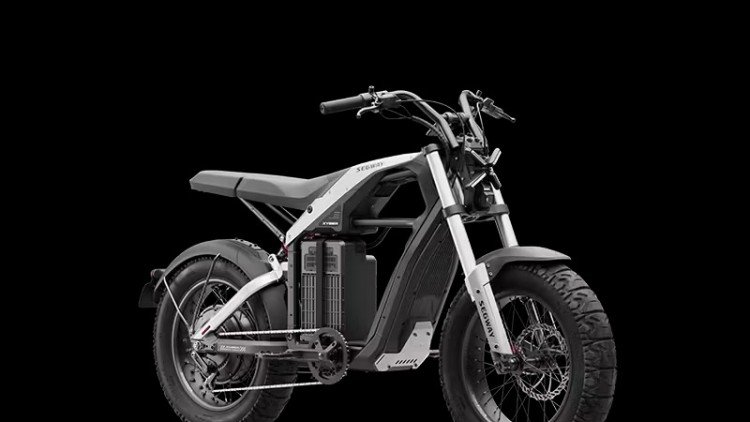
In the US, 28 mph is the legal ceiling for an e-bike's motor assist. That's the top of Class 3, the fastest classification that still counts as a bicycle rather than a motor vehicle. This category is for the bikes that go beyond it.
Getting past that ceiling usually means the bike ships with more than one personality. Many of these models leave the factory in a legal 20 or 28 mph mode for street and bike-lane use, with a separate, unlockable "off-road mode" that opens up the real top speed. That extra performance typically comes from a bigger motor and higher-voltage battery, which brings its own tradeoffs: more weight, faster battery drain at full power, and less predictable handling at speed on a frame that's still, fundamentally, a bicycle.
The legal side is important to consider within this category. Once a bike's assisted speed climbs meaningfully past 28 mph, it starts to fall outside the legal definition of an e-bike in most states, and the bikes at the extreme end of this list (some pushing 50, 60, even 80 mph) are built for private property and closed off-road areas, not public streets or bike lanes. Riding one at full power somewhere it isn't classified for can mean registration, insurance, or licensing requirements you won't find on a standard commuter bike. Speed here is the draw, but it comes with real limits on where and how these bikes are meant to be ridden.
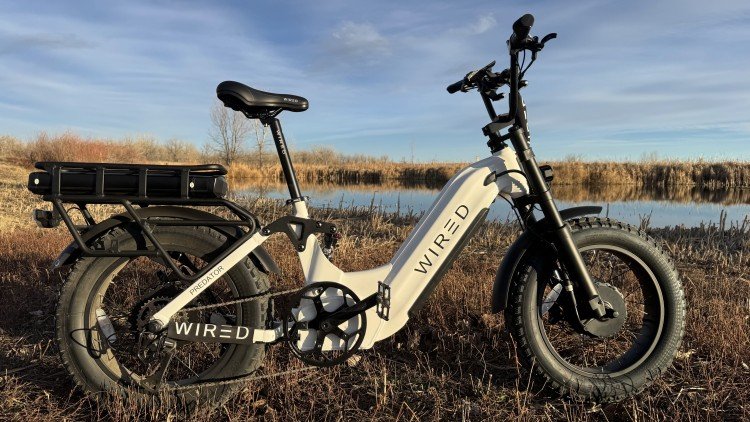
While the industry standard often stops at 750W, the true potential of electric mobility begins where the limits end. Our high-power category focuses on Class 4 and 'Off-Road Use Only' ebikes engineered for maximum torque and high-velocity output. We provide rigorous testing on motor heat management, battery discharge rates, and frame durability to help you find a high-output machine that is as safe as it is powerful.
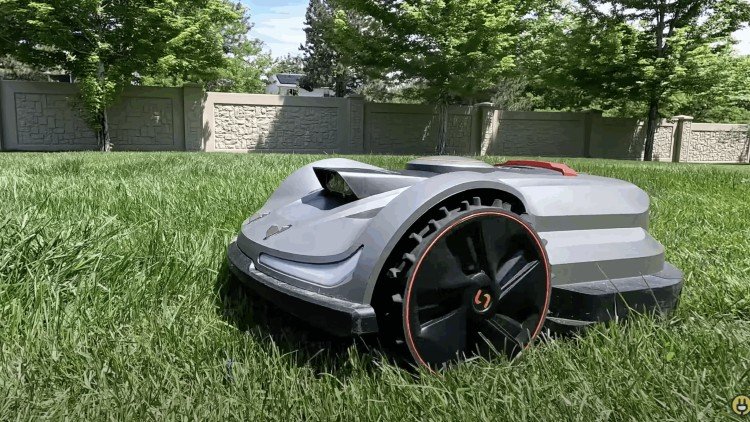
While most modern robotic mowers are built to be "weatherproof," there is a significant difference between a machine that can survive a downpour and one that is smart enough to avoid it. Our Rain Sensor category features mowers designed to prioritize the health of your turf and the cleanliness of your machine by detecting precipitation in real time.
Why a Rain Sensor is Essential
A common misconception is that rain sensors exist to protect the mower’s electronics. In reality, almost all high-quality robotic mowers are IP-rated for outdoor exposure. The sensor is actually there to protect your lawn.
The Benefits of Staying Dry
- Prevents Turf Damage: Wet soil is soft. When a 30lb robot maneuvers on a saturated lawn, its wheels can easily lose traction, spinning in place and "burning" the turf or leaving deep, unsightly ruts.
- Cleaner Cuts: Cutting wet grass is like cutting wet paper; it tends to tear rather than slice. Mowers with rain sensors wait for a clean, dry "snap" to the blade of grass, resulting in a healthier, more professional-looking finish.
- Reduces Maintenance: Wet grass clippings are heavy and sticky. They clump together and coat the underside of the mower deck (the "clogging" effect). This forces you to manually scrape out the deck far more often to maintain cutting efficiency.
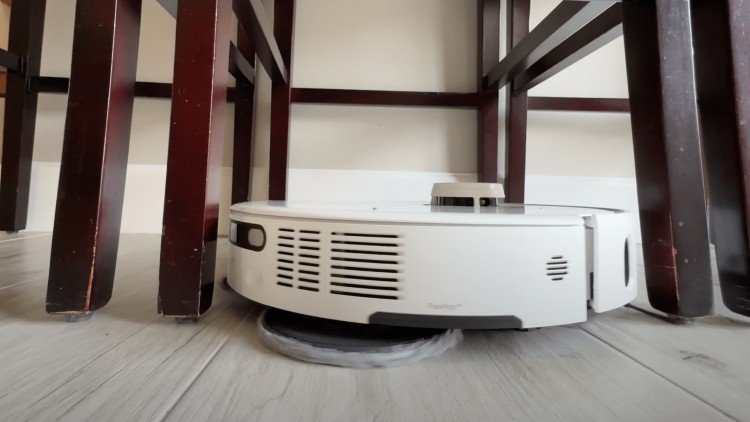
No robot vacuum climbs stairs on its own, so multi-floor mapping isn't about that. It's about what happens once you carry it there yourself. Without this feature, a vacuum treats every level like new territory, remapping the whole space from scratch each time. With it, the vacuum stores a separate saved floor plan for each level and automatically figures out which one it's on, usually by scanning the room and comparing it against its saved maps, a process that takes anywhere from a few seconds to about a minute depending on the model.
Each saved map holds its own room divisions, no-go zones, and cleaning schedule, so the boundaries you set on the main floor stay put on the main floor and don't carry over to the basement. Most current models store around three to four floor plans, plenty for a typical two or three-story home with room to spare, though a few premium options support far more for larger or more oddly configured houses.
A lot of budget robot vacuums only save one or two maps, which quietly limits them to single-floor use even when they're otherwise marketed as smart. If a multi-level home is the whole reason you're shopping, it's worth confirming the actual map count rather than assuming "smart mapping" automatically means multi-floor support.
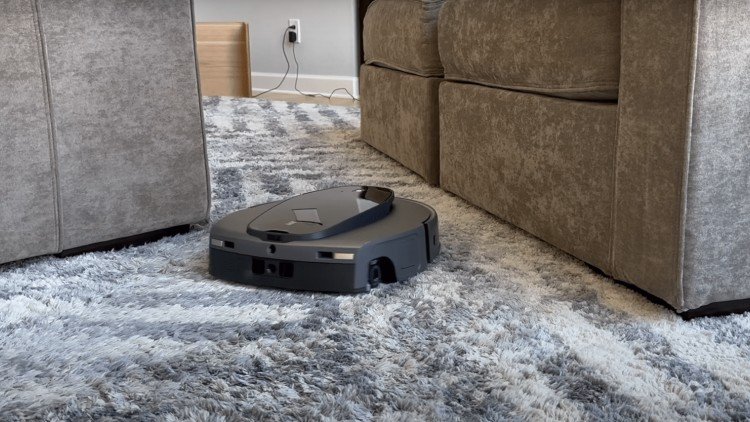
Push a finger into thick carpet pile and you'll feel it: dust and pet hair don't sit on top the way they do on hardwood, they work their way down into the fibers. Pulling that stuff back out takes real air pressure, measured in Pascals, or Pa, on most robot vacuum spec sheets. Below a certain point, a robot just skims the surface and leaves the deep-down debris exactly where it was.
Eight thousand Pa is where change becomes apparent. It's the line several current flagship models sit right at, and it's also the number that shows up most often when guides talk specifically about carpet depth cleaning and pet hair rather than general everyday suction. Below that, plenty of robots do a fine job on hard floors and light carpet, but they start to struggle once the pile gets thicker or the debris has had time to settle in.
Raw suction numbers only tell part of the story. A vacuum can advertise a huge Pa figure and still underperform if the airflow path from the intake to the dustbin is poorly designed, full of sharp turns that bleed off pressure before it ever reaches the floor. Suction also does nothing on its own without a brushroll built to agitate carpet fibers, not just glide over them. High Pa is the right starting filter for this category, but it works best paired with carpet-boost detection and a brush actually designed for the job, not as a number to chase in isolation.
If the goal of a robot vacuum is to automate your chores, self-emptying technology is the feature that finally makes "set it and forget it" a reality.
In this category, we review robots equipped with specialized docking stations that automatically suck debris out of the vacuum’s internal bin and into a much larger storage bag or canister.
Why Self-Emptying is a Game-Changer
The standard onboard dustbin of a robot vacuum is tiny—usually between $300mL$ and $500mL$. In a home with pets or high traffic, that bin can fill up in a single cleaning session, forcing you to manually intervene daily.
The Self-Empty Advantage:
- Weeks of Autonomy: Most modern docking stations can hold between 30 to 60 days worth of dust and hair before you need to touch the base.
- Ideal for Pet Owners: If you have shedding pets, a standard robot might stop mid-clean because it's full. Self-emptying models can return to the base, empty themselves, and resume cleaning without your help.
- Better for Allergies: Most self-emptying bases use sealed HEPA bags. This means when the robot empties, dust isn't puffed back into the air, and when you finally "empty" the vacuum, you're just tossing a sealed bag into the trash.
How It Works: The "Whoosh" Factor
When the robot finishes its job and docks, a high-powered motor in the base station activates. For about 10–15 seconds, it creates a powerful vacuum seal to pull debris from the robot’s bin.
Expert Note: This process is loud. It sounds like a full-sized upright vacuum running for a few seconds. If you have a light sleeper or a skittish pet, we recommend scheduling the "empty" cycle for times when the house is active.
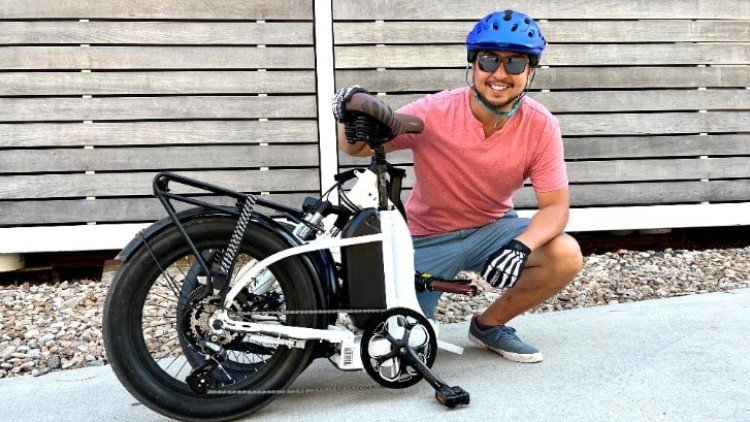
Touring asks more of a battery than a commute ever will. Where our Long-Range category covers bikes built to comfortably clear a typical day's riding, this one is for something further out: multi-day routes, loaded panniers, and stretches between charging stops that a standard single-battery setup just isn't built to cover. The bikes here are almost always running dual-battery systems, and that's not a coincidence, it's the hardware that actually gets you into touring-distance territory.
90 miles of advertised range is where that tier reliably starts. Below it, you're generally looking at a strong daily-use bike rather than one built for the road for days at a stretch. Above it, dual-battery setups typically land in the 90 to 150 mile bracket, with a handful of triple-battery machines pushing well past that into genuinely long-haul territory.
One thing worth knowing before a multi-day trip depends on it: the gap between advertised and real-world range tends to open wider here, not narrower. Loaded gear, a sustained touring pace rather than stop-and-go riding, and hillier routes all eat into that number. One detailed test of a bike marketed near 200 miles found it realistically delivered 80 to 120 miles under actual touring conditions, still excellent range for multi-day riding, just worth planning around the real figure rather than the one on the spec sheet.