-medium.jpg)
Every lithium battery degrades over time, no matter how well you take care of it. Most last somewhere between 500 and 1,000 charge cycles, roughly two to three years of regular riding, before you start noticing real range loss. On a scooter with a fixed battery, that decline usually means replacing the whole scooter once the battery gives out. On a scooter in this category, it means replacing a $100 to $300 battery pack instead, which is a meaningfully better position to be in a couple of years down the line.
The day-to-day benefit is just as real. A depleted fixed battery means two to eight hours on a charger before you're riding again. A swappable one means keeping a spare pack charged and ready, and the swap itself takes about as long as it takes to slide one battery out and another in. That matters most for two kinds of riders: anyone logging serious daily mileage who doesn't want to plan a route around outlets, and anyone who simply doesn't have easy charging access where they park, an apartment without a nearby outlet, a shared storage space, a workplace that doesn't allow charging indoors.
Worth knowing before you buy into this category: a removable battery is also a removable target, and theft is a genuine consideration with any scooter whose battery can be pulled out in seconds. Look for a locking mechanism, a key or app-controlled release rather than a simple latch, and get in the habit of pulling the battery whenever you park somewhere you're not keeping an eye on it.
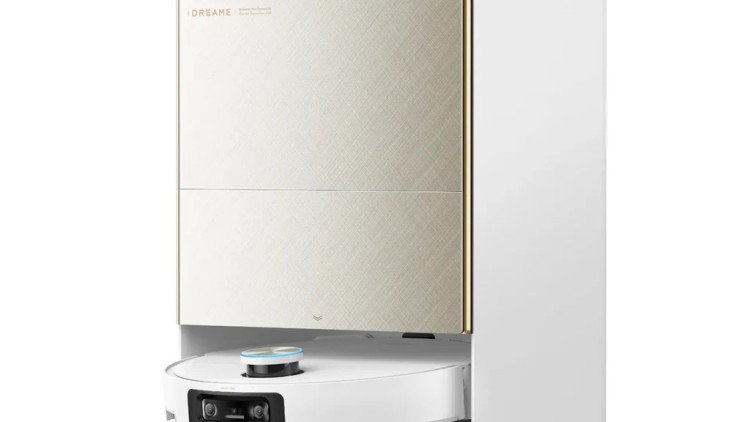
Pet hair and a standard bristle brush are a bad combination. Long strands weave between the bristles as the roller spins, tightening with every rotation until it's a solid cord that has to be cut out by hand. Anti-tangle brush designs exist specifically to break that cycle, though they go about it in two different ways.
Some models build a small cutting comb into the brush housing, so hair gets sliced apart as it wraps rather than accumulating into a mat. Others skip bristles entirely in favor of dual rubber rollers shaped to funnel hair sideways, straight into the suction path, so it never gets the chance to wrap around anything. Of the two, the rubber roller approach has generally proven the more reliable fix. Cutting mechanisms genuinely help, but hair still tends to build up near the roller ends over time, while the funnel-style rubber design keeps maintenance closer to occasional rather than routine.
Neither is completely maintenance-free, to be fair. Even the best anti-tangle systems can accumulate a bit of hair near the bearings after heavy use, so "anti-tangle" is more accurately "tangle-resistant." Still, the difference between either version and a plain bristle roller is significant enough that it's worth prioritizing over almost any other spec if pet hair is the main thing you're fighting.
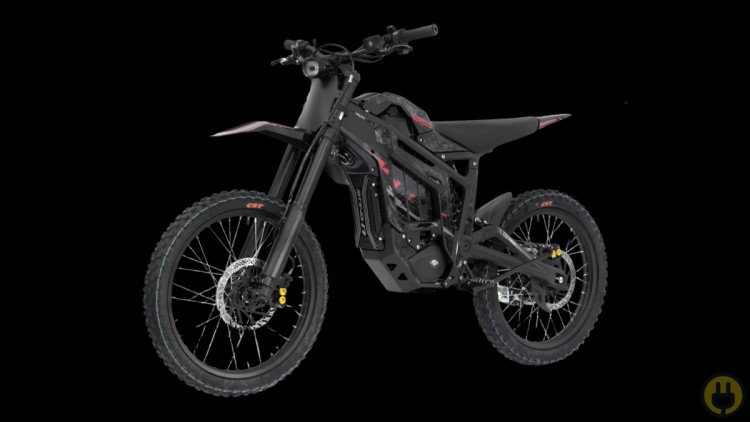
Most electric dirt bikes are built around a compact, low-slung frame, and for good reason: it keeps the bike light, nimble, and easy to flat-foot at a stop. But that same geometry can leave a rider over 6'0" feeling cramped, with knees bent too far and not enough room to stand comfortably over rough terrain. This category is for the bikes that break from that mold.
There's a real gap in the market here rather than a gradual curve. The mainstream trail bikes, the Sur-Rons, Talarias, and Segways of the world, mostly sit in a tight band under 32 inches of seat height. Above that, the next tier up is a different kind of machine entirely: bikes built to go head-to-head with 250cc to 450cc gas motocross bikes, with seat heights that jump into the high 30s. There isn't much in between, so a taller rider is usually choosing between "too short" and "built for it," not something in the middle.
The tradeoff is that the bikes that clear this seat height bar tend to be the higher-power, moto-style machines, not gentler trail bikes with a taller seat bolted on. That usually means more weight, more power to manage, and a bigger price tag than the entry-level options. It's also worth remembering that seat height is only part of the fit picture. Reach to the handlebars and standover clearance matter too, so if you're right at the edge of "tall," it's still worth sitting on the bike or checking the frame's reach spec before you commit.
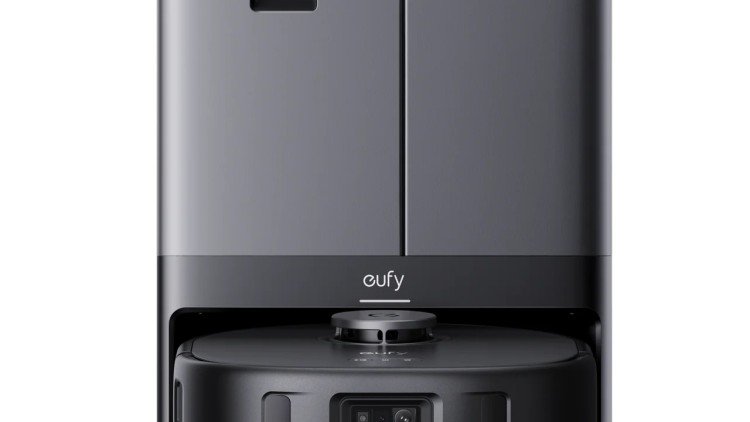
Not all mopping systems on these combo units do the same amount of work. The simplest just drag a damp pad behind the robot, which is fine for a light dust layer but does little against anything stuck to the floor. Step up and you'll find vibrating or oscillating pads that scrub thousands of times a minute, and above that, spinning dual pads or a continuously wet roller that applies real downward pressure, closer to how a person actually mops than a cloth being pulled across tile. Each step up this ladder tends to roughly double the price, but it's also where mopping stops being a gimmick and starts being genuinely useful.
Carpet is where these systems either earn their keep or become a liability. A wet pad dragged across a rug leaves it damp and can grind dirt in rather than lift it out, so automatic carpet detection with pad lifting matters more than almost any other spec here. Better units sense the carpet and raise the pad a few millimeters before rolling over it; premium versions detach the pad at the dock entirely and switch to vacuum-only mode. Skip this feature on a home with any carpet at all and you're stuck manually restricting where the mop is allowed to run, which undercuts the whole hands-free point of owning one.
A combo robot handles the maintenance layer well, the daily dust and light spills that would otherwise pile up between real cleanings. Dried stains, sticky spots, and anything that's been sitting for a while still call for someone to get down and mop it by hand occasionally. Think of it as raising the baseline, not replacing a deep clean.
-medium.jpg)
Five hundred dollars is real money, but in the electric scooter world it's genuinely the entry tier. The average budget scooter actually sells closer to $335, and at this price you should expect a straightforward commuter: 12 to 25 miles of range, a top speed around 15 to 20 mph, and a frame weight somewhere between 25 and 40 lbs. That's more than enough for the average commute, which for most riders is only 3 to 5 miles each way.
The trick to buying well in this category isn't chasing the lowest price, it's knowing where manufacturers are tempted to cut corners. Three things matter more than anything else on the spec sheet. Brake type: disc brakes cost a manufacturer a few extra dollars over drum brakes, but they cut stopping distance by 30 to 40 percent, which matters at any speed above a slow roll. Motor type: brushless motors last three to five times longer than brushed ones and run noticeably more efficiently. And battery cells: name-brand cells (Samsung, LG, and similar) hold their charge far longer than off-brand alternatives, which can lose meaningful range within 200 charge cycles. A scooter that gets those three things right at $400 will outlast and outperform one that ignores them at $600.
A caveat to keep in mind is that range numbers on the box are usually tested with a light rider at low, constant speed on flat ground. Expect to see roughly 70 to 80 percent of the advertised figure in real riding. If a scooter claims 20 miles, plan your commute around 15.
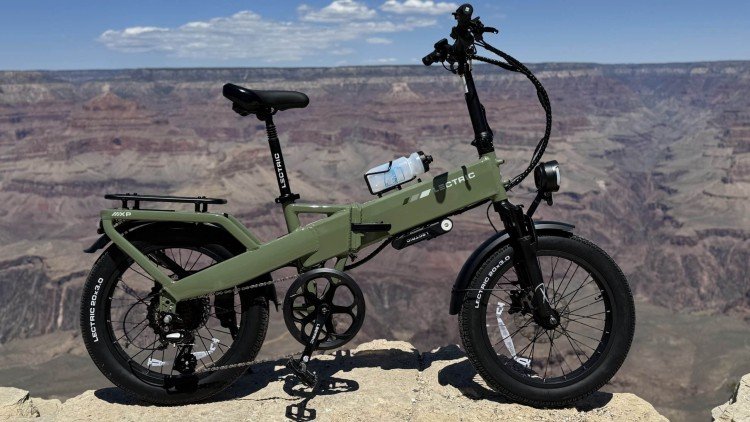
In past years, a thousand dollars would get you a pretty rough electric bike. That's changed. The sub-$1,000 segment has matured fast, and a handful of direct-to-consumer brands now build genuinely usable commuters and cruisers at this price, not just afterthoughts with a motor bolted on. That doesn't mean every bike here is a good bet, it means good bets actually exist now, if you know what to check.
What can you realistically expect at this price point? To start, motors are almost always hub-driven rather than mid-drive, typically in the 350W to 750W range, which is enough for flat terrain and moderate hills but will struggle more than a pricier mid-drive setup once the climbs get serious. Range tends to run shorter in practice than on the box: expect somewhere around 20 to 35 real-world miles even when the advertised figure is higher. None of that is a dealbreaker for a lot of riders, especially anyone using the bike for a short commute or errands rather than long-distance touring.
Where it's worth being extra careful is safety and support, not just performance. The corners that get cut at this price are sometimes frame quality or brake reliability, and occasionally something more serious: uncertified batteries and chargers are a real fire risk, and a few online-only sellers in this space have a habit of vanishing within months of a sale, leaving buyers without parts or warranty coverage. The fix is simple: check for UL 2849 certification on the battery and electrical system, and favor brands that have an actual track record and support line behind them. A bike in this price range can absolutely be a smart buy. It just requires a little more diligence than spending more would.
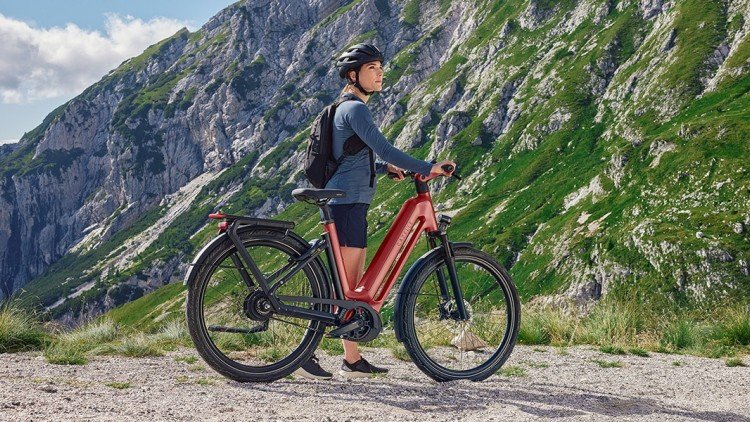
A Class 3 Ebike is an electric-assisted bicycle that is capable of reaching 28 MPH when pedalling. Currently, some of these bikes may or may not have throttles that will stop assisting the rider at 20 MPH. The addition of throttles, or the use of them on Class 3 Ebikes is currently a topic of debate, and we will update this description when there are clearer guidelines.
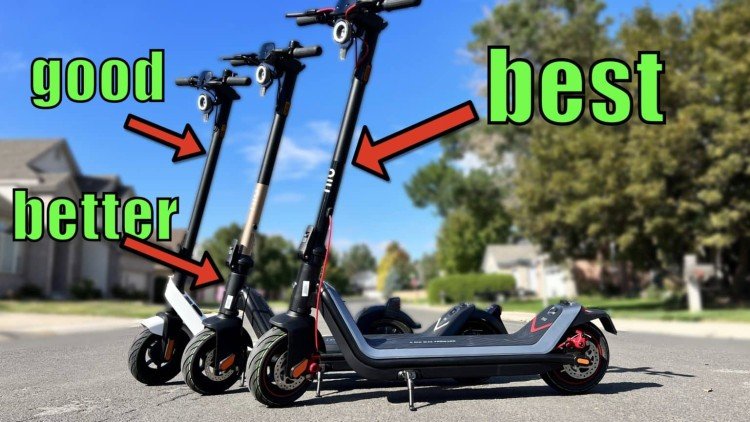
Flat tires are consistently the most common complaint among electric scooter riders, and self-healing tires exist specifically to solve that problem before it ruins a ride. It's easy to assume this is just another word for "tubeless," but the two aren't the same thing. A tubeless tire is simply built without an inner tube, the tire seals directly against the rim, and that construction alone gives it some baseline puncture resistance. Self-healing tires go a step further: they add an inner layer of sticky sealant coated across the inside of the tire, which fills a puncture the instant it happens, so a nail or piece of glass gets encased and sealed rather than draining your tire flat.
That distinction matters because not every tubeless tire has this feature, and it's worth checking for specifically rather than assuming "tubeless" on a spec sheet means you're covered. Brands describe this technology under a handful of different names, self-healing, self-sealing, self-repairing, all referring to essentially the same sealant-lined approach, and it's become common enough that models from Apollo, NAVEE, and Segway-Ninebot now build it in as a standard feature rather than a premium add-on.
Compared to the alternative most riders reach for to avoid flats entirely, solid or airless tires, self-healing tires give up almost nothing. Solid tires eliminate puncture risk completely but ride noticeably harsher and grip less predictably, since there's no air cushion absorbing impact. A self-healing tire keeps the comfort and traction of a real pneumatic tire while handling the small, everyday punctures (nails, glass, debris) that would otherwise leave you stranded, without you ever noticing it happened.
-medium.jpg)
RTK stands for Real-Time Kinematic, and it's the technology behind the biggest leap wire-free mowers have made past basic GPS. Standard GPS can put a mower's position within a few meters, fine for general location, useless for a precise mowing boundary. RTK corrects that down to centimeter-level accuracy by comparing the mower's satellite signal against a fixed reference point, which is what makes it possible to set a virtual lawn boundary with a phone app instead of burying a wire around the whole yard.
The technology has moved fast in the past couple of years. Early RTK systems needed a physical base station antenna installed somewhere on the property, tied to that one mower by radio signal. Network RTK, often shown as NRTK, pulls the same correction data over a cellular or WiFi connection instead, skipping the antenna setup entirely and making installation close to plug-and-play.
Some weak points exist. RTK depends on a reasonably clear view of the sky, so dense tree cover or a home close to tall buildings can degrade the signal, which is why a lot of RTK-based mowers pair it with a secondary system, cameras or LiDAR, to keep navigating through the dead zones until the signal clears. It also tends to sit at a higher price point than basic boundary-wire or vision-only models, a fair tradeoff for most buyers given what it replaces: no trenching, no wire, and boundaries you can redraw from your phone in minutes.
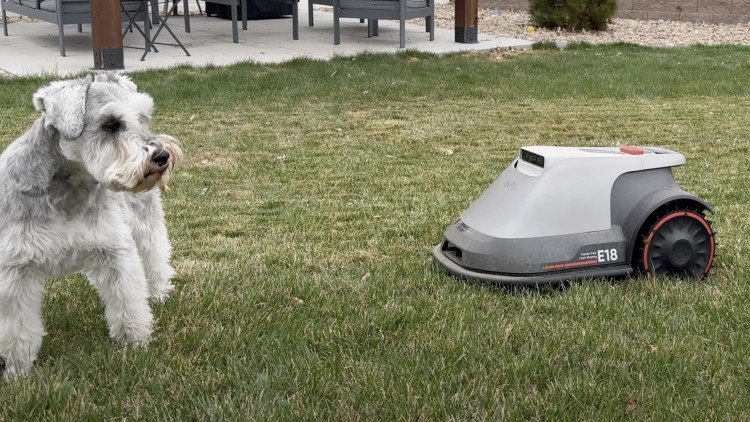
Sixty decibels is about the volume of a normal conversation, and it's also the rough line where robotic mowers stop registering as a neighborhood nuisance. Compare that to a gas mower, which can run anywhere from 85 dB up past 100, and it's easy to see why robotic models have become the default recommendation for anyone whose lawn shares a fence line with someone else's bedroom window.
Distance does a lot of the work here too. Sound drops by roughly 6 dB every time you double the distance from the source, so a mower reading 60 dB right next to it might only register in the mid-50s ten feet further out. That matters for HOA compliance specifically, since covenants that restrict outdoor equipment noise or set quiet hours are usually measured at the property line, not right on top of the machine. A mower that's borderline loud parked at the fence can be a non-issue in the middle of a larger lot.
None of this replaces good scheduling habits. Even the quietest mower can trigger a complaint if it's running during posted quiet hours, so pairing a low-noise model with a mowing schedule that respects those windows is still worth doing. But starting with a mower that's already built to stay under that 60 dB line takes most of the guesswork out of staying on good terms with an HOA board.
-medium.jpg)
Lawn mowers rank as the second most commonly stolen piece of outdoor equipment in the US, and once one is gone, recovery rates are grim, hovering around 7 percent industry-wide. That's the backdrop that makes GPS tracking worth paying attention to rather than treating as a nice-to-have.
The feature itself is straightforward: if the mower leaves its mapped boundary, the app sends an alert and reports its real-time location, turning a stolen machine from a total loss into something that's at least traceable. Most implementations pair this with geofencing, so the alert triggers the moment the mower crosses a line you've set, not after it's already blocks away. On its own, though, GPS won't stop a theft in progress. It works best stacked with the other layers, a PIN lock that disables the mower the instant it's lifted, and an audible alarm that draws attention before someone gets it off the property at all.
Higher price tags are to be expected in this category. GPS-equipped models sit higher up the price ladder than base units, and the feature is only as good as whether it's actually turned on. A mower with GPS tracking sitting disabled in a settings menu protects nothing. For anyone mowing in a neighborhood with any theft history, or leaving a mower unattended in a visible front yard, it's a feature worth prioritizing rather than assuming comes standard.
Standing for a 20 or 30 minute ride sounds trivial until you've actually done it on rough pavement, and it adds up fast. Seated scooters exist to solve exactly that problem, and the good ones aren't just a standing scooter with a saddle bolted on top. A purpose-built seated scooter is designed around sitting from the ground up: a lower center of gravity and a longer wheelbase for real stability, plus handlebars, deck space, and suspension tuned for a seated riding posture rather than adapted from a standing one.
That last part matters more than people expect. When you stand on a scooter, your legs do a lot of quiet work absorbing bumps before they ever reach you. Sit down, and that job shifts entirely to the scooter's suspension, so a seated scooter with weak suspension transmits every crack in the pavement straight into your back. It's why the better seated models tend to pair the seat with genuinely capable suspension rather than treating it as an afterthought.
This category tends to be the right fit for a few specific situations: long commutes where standing the whole way gets old, riders who deal with fatigue or balance issues and want the added stability, and anyone using a scooter as a real daily driver rather than a last-mile hop. It's also a common choice for delivery and gig work, where you're logging hours on the scooter rather than minutes. If comfort and stability matter more to you than shaving off pounds for portability, this is where to start looking.